

The problem with gardening
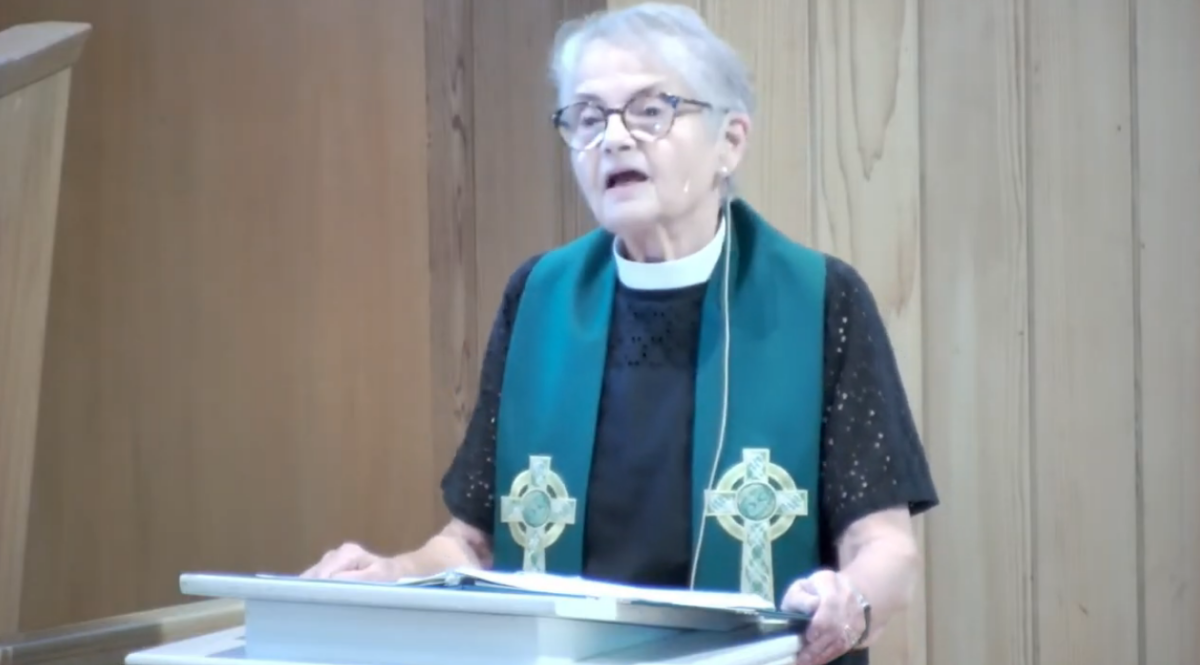
Were I to title this sermon, I’d call it “The Problem with Gardening.” If you were an astute listener last Sunday, you may have deduced that I’m not much of a gardener. Well, let’s make no bones about it – I dislike gardening and yard work of all kinds.
Now to clarify – I love flowers. I want a beautiful, well-kept, weed-free yard. I have special admiration for people who know about gardening, because I’m beginning to realize just how much know-how is needed to achieve the effect I want. But, what comes with that is the heat . . . and the mosquitoes . . . and dragging around hoses that never seem to reach . . . and dirt under your fingernails.
But mainly my dislike of gardening is about control. You spend hours spading or weeding or dividing or spreading mulch, and your bed looks terrific. But it never stays that way! Unlike painting a room, which takes effort but remains looking nice for a period of time, a garden will change overnight. A plant becomes enormous and takes over your carefully planned bed. A plant fails to thrive, and leaves an unsightly bald spot. A plant grows unevenly, maybe on one side only. The plant produces not the pink flowers you expect, but a combination of mixed colors. And the weeds are always there. In the summers of my childhood, my mother used to go out every night after dinner to pull weeds. You never outrun the weeds.
Gardening is not my gift.
Today we find ourselves in Jesus’ third major body of teaching in Matthew’s Gospel, and again, he tells us a parable. If last week we heard the story of seeds flung everywhere, with no regard for soil conditions, today Jesus talks about what’s come up. I’m right there with those dismayed slaves as they see the weeds. The field has turned into a mess, and even I, limited gardener that I am, know eventually the weeds will choke out the wheat.
Don’t you want us to pull the weeds, the slaves ask the householder? But surprisingly the householder says no. “‘Let both of them grow together until the harvest,’” he says. Then we’ll sort it out.
There’s something really unattractive and messy about this answer. The weeds will continue to crop up at an astounding rate. What exactly is the householder trying to do here? Why is he giving up control? Why add this ambiguity and uncertainty and worry about how good or bad the yield will be? If there is an issue, we’d want to take care of it, right now, before it is no longer manageable.
The householder is not a tidy gardener. This is not a tidy solution. Those of us who appreciate evenly cut hedges and tidy borders – the householder’s solution does not appeal.
Because in us, in human beings, there seems to be a very strong need to set ourselves over and against others. We emphasize not what makes us alike, but what makes us different. We say, I’m not like that person. I’m taller, prettier, smarter, higher on the social ladder. I’ve lived here longer. I do this and not that – and the list goes on.
Why is this? Well, I’m thinking this falls under the label “Sin,” with a capital S. This “othering” goes way back! Remember in the Hebrew Bible how Joseph – his father’s favorite, the one given the coat of many colors – could not resist lording it over his coatless brothers?
The great Methodist preacher William Willimon has written: “I’ll admit it. There are times when I wish that God had given me the ability to judge and to punish others for their unrighteousness. I see so clearly what is wrong with them.” We can laugh at Willimon’s statement, but isn’t he right? We human beings have the natural impulse to point out and pick at the faults, failings, and shortcomings of those around us. We so want to tackle those weeds – get them out of there – and enjoy (and take lots of credit for) our pristine expanse of green grass.
Consider the continuing conversation about immigrants – ship ‘em home, some would say. Others, in a more hospitable understanding of the American dream, argue differently. Even in the life of church, there are people, whole denominations sometimes, who suggest that weeds among them be removed. Shouldn’t the church stand for “right” over “wrong” – what is acceptable and unacceptable in the Christian life? Isn’t the church meant to uphold kingdom ethics – to draw clear lines in a confused world? Throughout centuries society and the church have debated wheat v. weeds. Sadly, both continue to do so today: who is in and who is out; who “meets the standards” and who does not; who is in genuine need and who is not.
We are so good at this. Are you really surprised that in this parable, it’s the slaves who are fixated on the weeds? The householder is way more mellow, much more willing to take the long view, to anticipate growth or change.
This reminds me of a conversation my much more easy-going husband and I would have nearly every spring. Every year, it went something like this:
Anne: We have quite a crop of dandelions in the lawn. What are we (meaning “you”) going to do about them?
Paul: I like dandelions. They’re pretty.
Anne: Well, I don’t like them in the lawn.
Paul: They’re just plants in the wrong place
You will never convince me dandelions belong in the lawn. But isn’t that the point here? Even Christians, maybe especially Christians, are quick to assign the labels of weed and worthwhile. It is easy to point at what we perceive to be weeds all around us, while failing to see the weed-like growth within ourselves.
And I’m betting our readings of the hearts of others – most of the time – are not accurate and not very skillful.
I’m reminded of a conversation I had just last Sunday with one of our members. The general topic was our nation’s political situation. This person described themselves as a “flaming liberal,” but as we continued the conversation, this person noted how they have recently toned things down a bit. They said something like this, “I’ve come to realize that some of these people are people I care about and love.” This person commented that their political rhetoric is not quite as sharp or angry. A wise person, indeed!
I also remember a pastoral colleague who made this remark in a conversation. She said, “Everything makes sense to the person who proposes it.” Exactly! Or as former Bishop of the New England Synod Jim Hazelwood once wrote, “Most people are doing the best they can with what they have and who they are.”
We are poor judges of one another. We are quick in our condemnation. Our empathy is limited; our self-interest is off the charts. Our judgment usually does not see the whole picture. God favors the weeds and wheat growing together, and God doesn’t give up on any of the plants.
Thankfully, Jesus makes it clear today that we are not responsible for driving out the demons, or perceived demons, of others. Jesus calls us today to resist that strong human desire to judge and rank, to condemn, and to rip those weeds out by the roots. For as Paul reminds us over and over in the book of Romans, “There is no one who is righteous, not even one.” (3:10) We fail the purity test. We all fail the purity test. Our community, instead, is formed around the cross of Jesus Christ, who died to redeem all sinners.
It is not our job to determine the limits of God’s grace and generosity through the cross. Simply put, that is God’s task – full stop. Period. We remember too that Jesus came to earth precisely to turn weeds into wheat – aren’t our own lives examples of that very miracle? When the Pharisees asked the disciples, “‘Why does your teacher eat with tax collectors and sinners,’” didn’t Jesus answer, “‘Those who are well have no need of a physician, but those who are sick . . . . For I have not come to call the righteous but sinners.’” (Matt. 9:11-13)
In the garden, I find I have little control – but isn’t the Christian life much the same? As we grow in faith, we give up control. We come to recognize that God, creator of the universe, is in charge of our lives and of the world, and we are not. There’s that hackneyed expression, “Let go, and let God.” When it comes to judging others – not our job. We do not, we cannot, draw a line around God’s beloved. We, thankfully, are not responsible for determining the limits to God’s grace and generosity.
I know you remember the terrible time after 9/11. At the time I had a conversation with an individual who ended by saying, “Well, we all know where they will end up,” meaning the perpetrators who flew into the World Trade Center. But wait. We do not know any such thing. I would hesitate to say that I know the mind of God.
And don’t we all count on the certainty that God’s judgment is lovingly tempered with mercy?
There is another issue here, though.. Our desire to spray that Roundup, to root out the weeds, diverts us from the real work of the church, which is inclusion. Remember the Great Commission later in Matthew’s gospel, “‘Go therefore and make disciples of all nations, baptizing them . . . and teaching them?’” (Matt. 28:19-20) Remember Jesus’ words to care for the sick, feed the hungry, welcome the stranger, or visit those in prison? Jesus has given us more than enough to do.
So, for now, we live with, as William Willimon labels it, God’s “messy love.” Yes, God appears to be a messy and not very efficient gardener. The garden may not look as we wish. But this messy kind of love is part of our lives as Christians, because although God’s reign has begun, it is not yet here in its fullness. We’re on God’s timetable, not our own, and God’s work is far from done.
Jesus told parables to transform lives. May Jesus’ words today transform us into true and holy wheat. Let God the gardener watch over the growth. We’ve got other things to do. We’ll lay out the welcome mat on the doorstep of this church for everyone – and let God take care of the rest.