
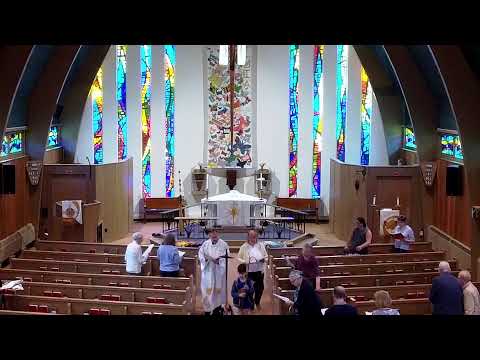
Grace at the Margins
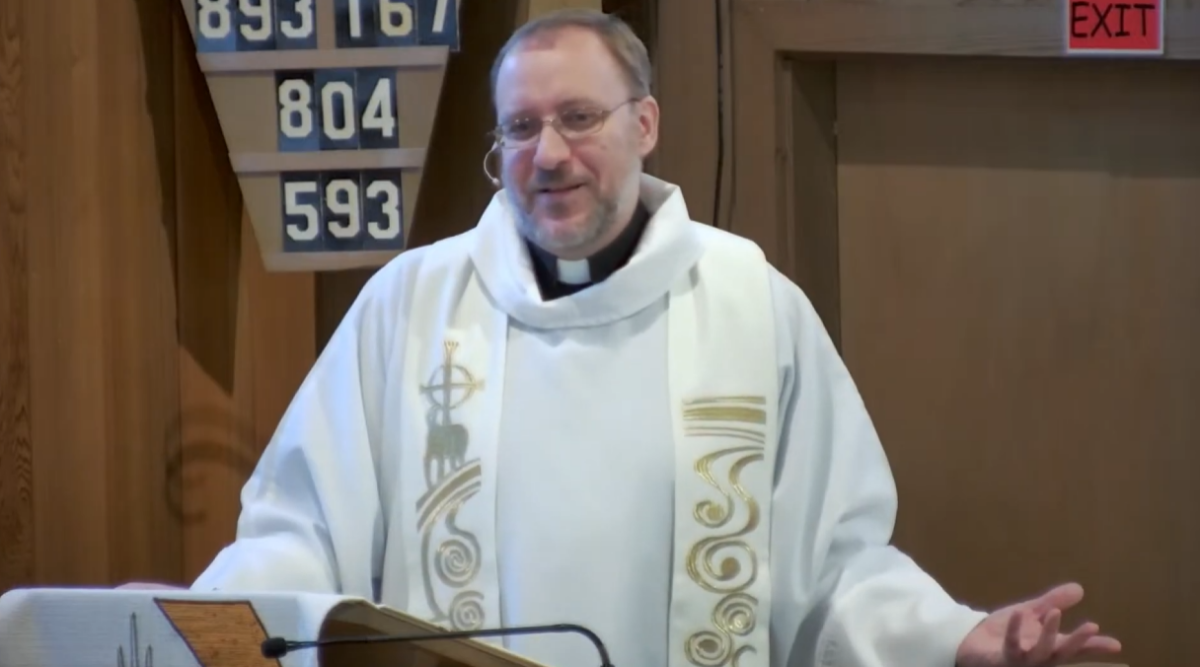
Before I get to this morning’s text, what I’d like to do is share with you just a little bit about the world that I come from in campus ministry. And I do that for two reasons. One, because I find that when I visit places, people often want to hear about what the church is doing in other places, especially because some—I assume that somewhere in your budget, as a church, you give some amount of money to the synod every year. Is that true? And some small portion of that goes into a fund that helps contribute to support campus ministries such as mine. So thank you. And I’m not here to ask for money, but if you wanted to give more, I’d be fine with that. But you might like to hear about what your church is doing with the resources that you offer that we’re so grateful for.
Also because, when I do touch on the scriptures, the way I read them—this is, I think, true of everybody—comes through the lens of where I am and what I’m doing. And so you’ll be able to understand much more efficiently what I have to tell you about the scriptures if you have a sense of where I’m coming from. Fair enough? Excellent. And you’re already answering my questions. So, like, excellent. When I ask a question, I expect a response. So thank you.
So, every campus ministry is different, and I am one of the chaplains at MIT. And I say “one of” because the last I checked there was about twenty-seven of us, from all different faiths and backgrounds. So Christians are probably a plurality but not a majority of those chaplains. It’s a very international school, a very diverse school. We have all different faiths represented.
What do we do? So I’m the Lutheran one. I spend time doing all kinds of fun things, including—sometimes I get invited to speak or be on a panel. I work with other chaplains or staff or professors to create programming for education. But the majority of what I do is I work with my Episcopalian colleague as a partner, and we together lead a student group slash worshiping community that we call the Lutheran Episcopal Ministry at MIT.
And every Wednesday night—because, as I said, nobody wants to get up on a Sunday morning on a college campus—every Wednesday night we have a worship service not entirely unlike this one, a full communion with liturgy, and that is followed by a dinner that the chaplains cook or provide. So I did not know when I went to seminary—no one told me—I needed to learn how to cook for groups of twenty, including eating restrictions and all kinds of stuff. But that’s what we do.
And if you came to one of our services—which you’re welcome, if you’d like to come, just let me know ahead of time so that I know who to expect. But visitors are welcome. If you were to come, one of the things that would strike you was that in our sermon time, the sermons are, hopefully, fairly short most of the time, but then there’s an extended period for conversation right there in the middle of the service. So students can ask questions, they can bring up things about the scripture or about what the sermon was about. Oftentimes they will simply take a sharp left-hand turn into completely uncharted territory, based on what is important to them at that moment. And together, we wrestle with questions and explore scripture and try and figure out who is this God that we’re worshiping, and what are we to do about it.
And then we eat dinner together afterwards, like I said, which is a hugely important part of our life together. So that’s what we do. All of it hangs on two distinct values that really distinguish us from any of the other even Christian groups on campus. And here’s what they are.
The first one is that it is to be a safe space for everyone. And this is important for a couple of reasons, in a couple of different ways. One is that the students who come and join a group aren’t necessarily Lutheran—some of them are. And a few of them are Episcopalian, and that’s great. And then a good number of them are people—perhaps they do not come from a religious tradition, perhaps they do come from a religious tradition, usually Christianity, but they’ve had some terrible experience of Christianity that makes them be like, “I’m still interested in God, but I’m not doing this whole Christian thing.” And this could be coming from any kind of Christian church—Lutheran, Catholic, Evangelical, whatever—but there is a sense of danger for them as they come into our space.
And so it’s really important that this is not a space where you come to be told what to do or who to be, but a place where it’s safe to be who you are. And then we’re all going to contribute, and no one owns the theological space. When someone asks the question, I don’t get to say, “Well, here’s the answer,” and “I know because I went to seminary.” Because, first of all, I might be the only Lutheran in the room that day, so no one cares. And certainly I’ve got an Episcopal colleague who thinks differently—a little bit differently—we get along. And there might be students from other traditions who have different answers. And so everyone gets to throw their answers on the table and we sort through them, but no one’s got the authority to say, “Here’s what you should think.”
It’s also safe in the sense that—and as I said, people have had bad experiences of churches—our group on campus is distinct. Our niche as a Christian group is we are the one that is fully accepting for people who are gay, trans, and queer. Which actually makes me really sad that that’s—I’m not sad that we are that; I’m sad that for some reason that’s strange. But there are quite a few members of our group who are there because they’ve been kicked out of their own churches because they are one of those three things. And so ours is a space where — the phrase is trite —“Come as you are.” But it’s really important that we keep that as an active thing that we’re talking about constantly.
And then the other one goes with it, and I’ve touched it already, and that is we value questions. We are a place where people can come and something horrible happened, or you’re wrestling with something, or you have a huge, difficult question, and you can come in in the middle of service, drop that like a bomb, and we will honor it and value it and sort through it. And we might not have an answer, but we might have some wisdom—each from our own tradition—that might help. And we explore it.
I’m willing to bet that by the end of this morning, you will all have been very polite to me because I’m a visitor, and, probably, no one will ask me any truly deep and difficult questions. And if you do—good. I mean, I’m not expecting it. We just met each other. But one of the things that I love about campus ministry is you never know what incredibly difficult question you’re about to be asked. And so you’ve kind of got to be on your toes.
But those are our values: come as you are, because God loves you. And we also know that we are all wondering and questioning and incomplete and have stuff that we’re struggling with. Bring that too.
And then we have a slogan for participation because, again, everyone’s coming from a different place, and they might not be comfortable with some weird worship practice they’ve never seen before. So when it comes to doing church together, we say, “All may. None must. Someone probably should.” So, you know, we’re going to have communion. Someone should probably bless the bread, and someone should probably eat it. But if that’s not where you are, we’re not putting that on you.
All of this because of the wonder of what I find on campus. For one thing, MIT is a pressure cooker. It’s an amazingly wonderful place where amazing things are being invented and thought of and created, and almost everybody lives in a constant state of semi-panic. “What if my thesis doesn’t turn out to work?” People who have their whole lives invested in getting this diploma. Or people who are there from very far away, from places that are completely foreign and in this weird, weird place that’s really not normal to any of us—trying to manage it, trying to find connection.
And most recently, I’m not going to go into depth in what’s been happening in the news lately. But if you’ve read in the news what’s happening in higher education at the moment, I can vouch for the fact that, yeah, there’s panic. And in particular, I have a lot of international students in my group, so they’re scared. And I do also a lot of work meeting with students from the Middle East. And they are the most scared people that I know.
So all that’s going on, and somehow I walk in as a Lutheran who likes green Jell-O and knows the difference between a Jell-O salad that is a salad and a Jell-O salad that is a dessert. And I walk into this space where nobody else is familiar with any of that and am told to go do ministry. And the MIT administrators want me to help people who are having mental health crises because that’s what they value us for. And the Lutheran Church says go take care of the Lutherans—and, like, there are like three of them. And then, “go proselytize,” and I’m like, that’s not really what we’re doing. But sure.
And then I meet this amazing group of strange, strange people—because we’re all strange, me too—and what do we do together?
And so, for that reason, I read—probably 99% of pastors this morning are going to preach on the gospel—I read our first lesson, and that’s what calls to me. And it’s probably the story of Lydia. Paul gets this vision saying, “Please come to Macedonia and help us,” and he goes off with his whole troop, and they meet these people, including this woman named Lydia.
And I’m willing to bet that if any of you made your top ten lists of most inspiring passages in the New Testament, I would be frankly surprised if this one showed up. It’s pretty straightforward and normal and not miraculous—at least not in a fantastic way. And kind of, that’s what I like about it. So just a few things that I find particularly meaningful and helpful coming from a context of living in a place where I’m one of the only Lutherans and somehow I’m supposed to be ministering to people. And what I think—and it’s not to say that it’s about me—but it’s about what our church is doing kind of on the margins of where church is.
I love that they don’t really seem to know really what they’re doing. They know who they are—they are confident, and Paul particularly, in who Jesus is and the worth of sharing that—but Paul has a vision one night, a dream, a person from Macedonia saying, “Come help us,” and no further information. And so they become convinced, “We should go to Macedonia.” Sure. So they get on a boat and they report all the places they went.
And where do they go? Well, they end up in Philippi. Why Philippi? Why not? There’s a lot of people there. So they get to Philippi. And where do they go? Well, they go down to the river where they suppose there’s a place of worship. They clearly have not read the travel guides on Philippi to know exactly where everything is. But they get there. And who do they find? A group of women.
I have to kind of wonder how normal it would be for a bunch of dudes to stroll into this particular part of town and start talking to the women there. Was that transgressive? Was that normal? I don’t really know. But it seems odd. But sure, talk to them.
And here’s the part perhaps I love most. In the Book of Acts, whenever people encounter the Apostles, the Apostles never hesitate to launch into a long sermon that details the entire history of the people of Israel and makes some grand point about Jesus. This happens constantly. And so they show up, and they talk to them about what? There’s no giant sermon here. They just talk.
What do you think they talked about? (Remember, I expect answers to questions.) What do you think they talked about?
What are you doing here? Who the heck are you?
What else?
What’s that?
I bet they got to—well, certainly they got around to Christ. We know this for sure. I don’t think they started there.
Maybe they talked about, “What do you do?” “Well, I make purple cloth.” “Cool. What’s that?” “I’m a tanner.” “Are they similar? Are our businesses similar at all? Tell me about making purple cloth.”
“What else is happening?” “What’s that? Susie and John are getting married.” “Cool. That’s cool news.”
“What else is happening?” “Oh, did you hear about the local sports game?”
This is actually how our services start at MIT. And then we’re at some point ten minutes in, we’re like, “Oh, right, we’re supposed to start worshiping now.” There’s connections being made that don’t necessarily start with, “Hey, do you know Jesus?”
Because believe me, on the MIT campus, we have plenty of people who come from off-campus with megaphones and stand on the street corner and tell everybody that they need Jesus. And Jesus is wonderful. And if you don’t accept Jesus, you’re going to hell.
And those people annoy us.
And we’re not sure why—we were actually talking about this last week—why do those people annoy us so much?
And we realized they wouldn’t annoy us if they were like some other religion entirely. We’d just be like, “Yeah, this dude with a megaphone, that’s just, like, Tuesday.” But to have somebody who is professing our faith in a way that treats people like objects that need to be converted makes us feel… gross.
As opposed to the person who comes in and says, “I don’t really belong here, but can I hang out?” Someone told me last week that campus ministry is the ministry of loitering. Which I kind of like. Show up and make yourself available. And you see who is interested in sitting down with you. And then you share.
And as the story continues, eventually Lydia—a worshiper of God, who I find fascinating. We know so little about her. But what we can infer—her name is Lydia, she’s Macedonian assumedly, so she’s not Jewish. She’s a Greek person, a Greek woman. But she is a worshiper of God. And there’s historical precedent for this—in Jewish synagogues of the time, scattered around the Hellenistic world, they often kept member lists where they would be like, here’s the Jewish people who are members of the synagogue, and here’s the non-Jewish people who worship God—kind of like the converts who worship with us anyway.
And so, assumingly, she was one of those. And here comes Paul, who is Jewish. And so they kind of have some things in common, but they’re also very different, from different places. And they sit down together, and at the end of the story, the sum total of it is: the Lord opened her heart to listen eagerly to what was said. And then she was baptized. And then she invited Paul and his companions to stay in her home.
All of this came down to hospitality. Come and stay. Paul’s grace to her, along with sharing what he knew—the grace Paul showed was to be willing to be a guest. Paul didn’t have the luxury of saying, “Come to my church.” Paul went to wherever he thought there might be someone he could meet, and started to build a relationship with them, and then was willing to be a guest.
And friends, all of this to say—that’s how I see God working on the margins of church. It never turns out well to stroll through and be like, “I am Christian, hear me roar.” Instead, the way God works is through hospitality. That’s why eating is so important for us—together. It’s sitting down with people who are not Christian at all and being like, “Hey, would it be cool if I came to your thing?” And just be. And let those relationships happen.
Because the great miracle—the thing that’s amazing and fantastic—isn’t that somebody was raised from the dead in this story, because no one was. Or that someone was healed from a terrible disease, because no one was. That happens elsewhere. But that people’s hearts were changed, and that they were brought together in community.
As one of my students said a couple of weeks ago, “Thank goodness that God is in the business of reconciliation.” Because we live in a world where people are divided. And I mean that both in terms of campus and just in general. And we all have our identities, and we all have our reasons to be suspicious of each other. And God works on the margins, where the groups rub shoulders, and works for sitting down and having a meal and saying, “Would you like to stay?”
It’s a quiet and wonderful grace. And I can assure you that it’s amazing to watch people be transformed by who they encounter.
So thanks be to God from the margins of the church—where that’s what grace looks like.
Amen.